
Case Study | LineX Macro Cameras Enable High-Precision Lithium Battery Separator Inspection
As a core safety component of batteries, lithium battery separators put forward strict requirements for the detection of small defects, production speed and detection stability. In response to the problems of traditional line scan cameras such as distortion, difficulty in balancing speed and resolution, easy pollution offset, and limited installation space, INSNEX has launched a separator detection scheme based on the CIS macro camera. With the advantages of no lens, no distortion, high-speed scanning, highly integrated anti-pollution and vibration resistance, and light and easy installation, it can be adapted to production links such as coating machines, slitting machines, and rewinding machines to achieve high-speed and high-precision detection of separator defects. Online detection. The solution can achieve ** defect detection rate ≥99.9%, manual re-inspection working hours can be reduced 90%, and detection efficiency can be improved 300%**. It also supports defect image storage, traceability and rapid replacement, helping separator companies improve production efficiency, product quality and production line automation level.


01 Introduction
In the structure of lithium batteries, lithium battery separators are one of the key inner components.
Lithium battery separator is a porous polymer film made of polyolefin (mainly polyethylene PE, polypropylene PP) or composite materials. Its core role is to be placed between the positive and negative electrodes of lithium-ion batteries, physically isolating the positive and negative electrodes to prevent short circuits, and at the same time allowing lithium ions to migrate back and forth between the positive and negative electrodes through micropores, which has both ionic conductivity and thermal safety protection functions. The performance of the separator determines the interface structure, internal resistance, etc. of the battery, and has an impact on the battery's capacity, cycle, etc.
Lithium battery separators are the core safety line of defense for lithium batteries. The national standard GB/T 36276-2018 and the international industry standard IEC 62619: 2021 have clarified that they are the core safety components of lithium batteries. With the upgrading of lithium battery technology, the expansion of application scenarios, the intensification of safety accidents, and the tightening of regulations and standards, separator companies are facing increasingly high quality requirements.
Defects caused during the production of separators will have irreversible negative impacts on lithium batteries in terms of battery safety, electrochemical performance, production consistency and cost. In severe cases, they will directly lead to battery scrapping or cause safety accidents. In this context, LineX macro camera launched by INSNEX helps separator manufacturers improve quality and efficiency, improve yield, and ensure the safety and reliability of lithium electric separators.
02 Traditional Camera Challenge
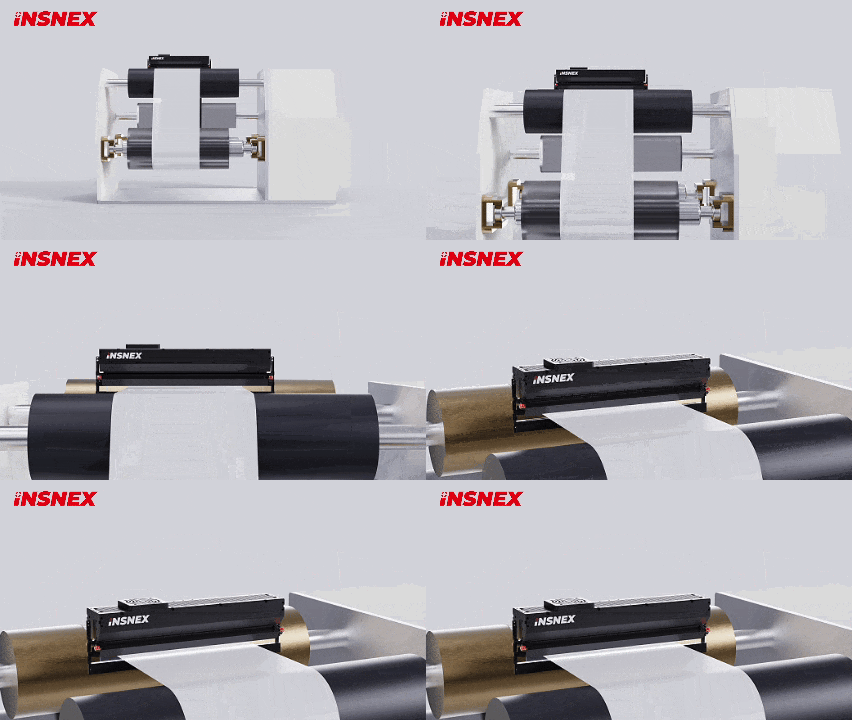
In more and more lithium separator process applications, traditional line scan cameras are gradually unable to meet customer requirements. Its main limitations are:
1. Imaging distortion and aberration, insufficient defect identification accuracy
Traditional line array cameras rely on lens imaging, and edge areas are prone to distortion, leading to misjudgment or missing detection of small defects; and optical aberrations of the lens will reduce pixel consistency and affect the accuracy of defect recognition.
2. Frame rate and resolution conflict, and detection speed and accuracy are difficult to balance
The detection speed of traditional line scan cameras is limited by the frame-resolution contradiction: increasing the resolution will lead to a surge in the amount of data, requiring higher computing power support, and prone to detection delays; if the resolution is reduced, small defects cannot be identified.
3. It is easy to pollute and migrate, and frequent maintenance affects production line operations
The lenses and light sources of traditional line scan cameras are susceptible to dust pollution, and vibration can cause object distance deviation, which requires regular shutdown and calibration, which affects the production line speed; high-magnification lenses have high cleaning and maintenance costs.
4. Installation space is limited, which runs counter to the trend of miniaturization and intelligence
The installation space is extremely easily limited by the installation environment. Production equipment is usually required to reserve enough installation space, which is inconsistent with the current trend of miniaturization and intelligence equipment requirements.
03 CIS core advantages
During lithium battery separator testing, CIS (Contact Image Sensor, contact image sensor) can replace traditional line array cameras. The core reason is that it meets the high-speed, high-precision, and high-stability detection needs of separators, and has significant advantages in cost, installation, and imaging consistency. It is especially suitable for the two-in-one inspection scenario of small defects in the separator (such as 5-20μm pinhole) and size measurement.
Specifically reflected in:
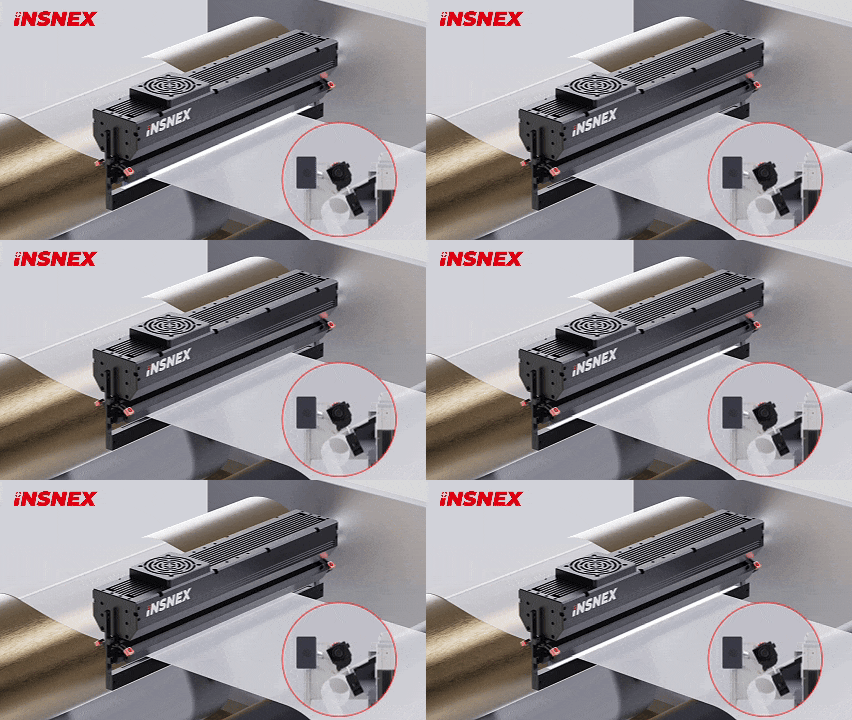
1. Lens-less close-range imaging, no distortion and high uniformity
CIS does not require a lens. The photosensitive unit scans directly "close" to the separator surface without optical distortion. The pixel uniformity can reach more than 99 %, which can clearly capture low-contrast defects (such as oil stains and ultra-thin area thickness deviations).
2. Parallel high-speed scanning, suitable for high-speed production lines
CIS adopts a line scan + parallel data processing architecture, and the scanning frequency is more synchronized with the production line speed. Even at the 500m/min speed, the detection accuracy can still be maintained.
3. Highly integrated anti-pollution and vibration resistance, lower maintenance costs
CIS has high integration and no external lens. The sensor surface can be equipped with a dustproof protective film, which has strong anti-vibration and dust capabilities.
4. Lightweight, compact and easy to install, no need for complex debugging
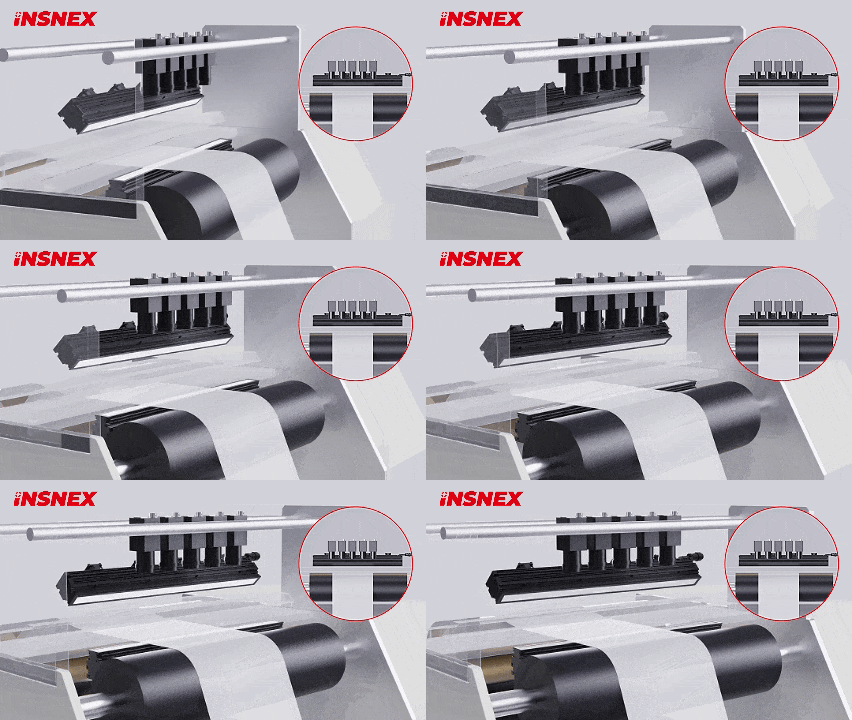
During installation, it is only necessary to fix the distance between the sensor and the separator (usually <1mm), which does not require much installation space. It can usually be installed directly on production equipment without complex optical debugging.
CIS replaces traditional line scan cameras, which is essentially a dual choice for technical adaptability and cost-effectiveness-its distortion-free and highly consistent imaging characteristics perfectly match the detection needs of micro defects in the separator; at the same time, it has the advantages of high speed and low maintenance., it meets the efficiency requirements of industrial production lines.
04 New Industry Solutions
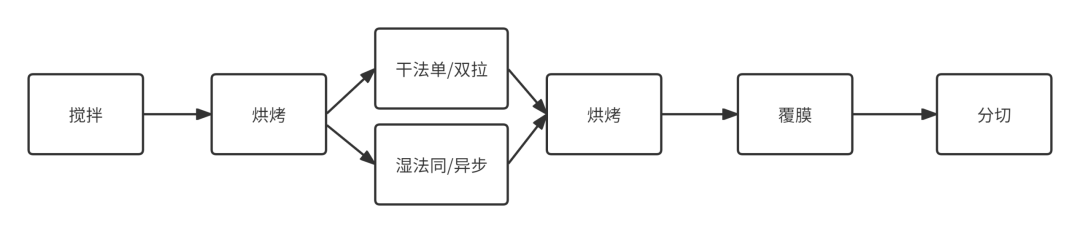
Diaphragm production process:
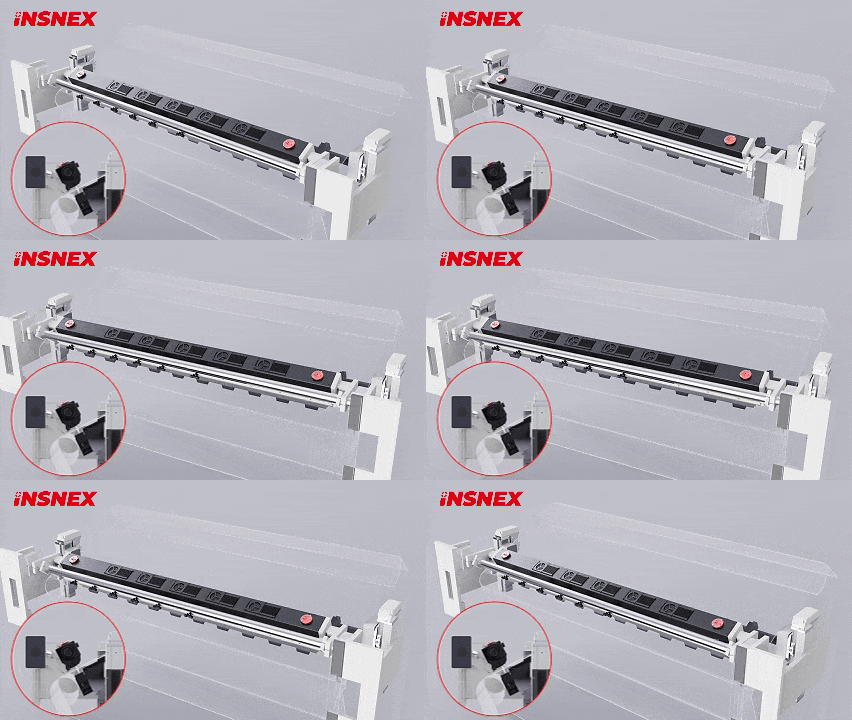
Application scenarios: coating machines, slitting machines, rewinding machines, etc.
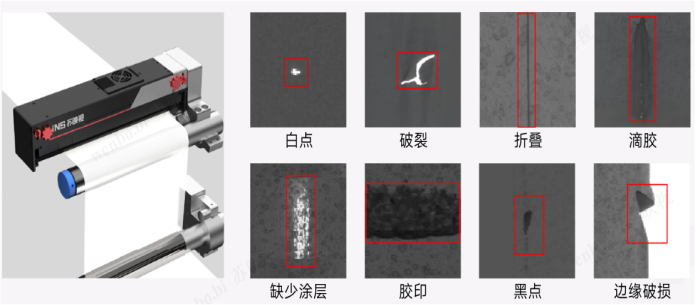
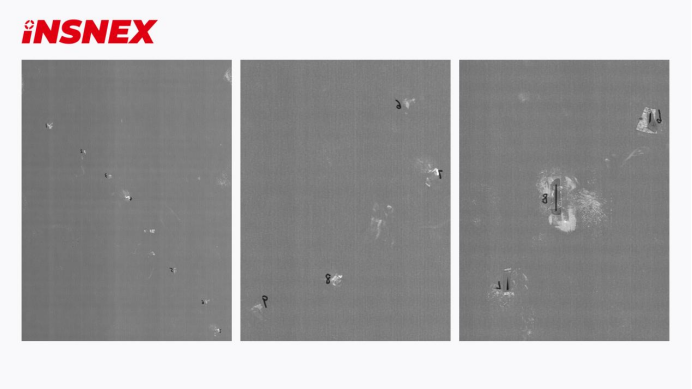
Display of detected defects:
05 Customer Benefit
1. Help customers achieve fully automatic defect detection, eliminate manual intervention, and reduce manual re-inspection man-hours 90%
2. Improve the online inspection accuracy of lithium battery separators and ensure that the defect detection rate is ≥ 99.9 %.
3. In a narrow space, using a macro camera to develop a three-axis synchronous detection system, the detection efficiency is improved by 300 %.
4. The defect detection rate is above 99.9 %. Even in the face of cutting and pulling, production operators can quickly resume production in a few minutes using formula management.
5. With INSNEX high-speed macro cameras, separator manufacturers improve shipment efficiency and product quality while enabling storage and traceability of defect images.
6. has achieved higher-speed automated production, greatly reduced the probability of defective products flowing out, and achieved a win-win situation of efficiency and efficiency.
06 Customer Reviews
"INSNEX's CIS macro camera solves our core pain point. It helps us achieve fully automatic defect detection, eliminates manual intervention, and reduces 90% of manual re-inspection hours; even when cutting and replacing models, operators can quickly resume production in a few minutes using recipe management. The most important thing is that the defect detection rate has remained stable above 99.9 %, which gives us complete confidence in the separator safety defense line."
—Technical Lead at a Leading Domestic Separator Manufacturer

About Us

INSNEX was established in 2017. It has long been deeply involved in visual inspection scenarios. Relying on its profound industry application accumulation, it has continuously explored and iterated advanced imaging products that [make defects clearer] and the "Vision+AI" platform software to continuously explore technologies and products with better experience in the field of defect detection. LineXThe series of near-field line-scan cameras (NFL) are All-In-One imaging solutions built by INSNEX for compact spaces. LineXThe camera has the advantages of high integration, small size, and extremely low distortion, which solves the problem of multi-machine splicing and makes clear imaging easier. Another "Vision+AI" platform software product paired with INSNEXInsWorks can easily handle the development and deployment of complex inspection systems and comprehensively improve the accuracy and stability of defect detection.
At present, INSNEX products have been widely deployed in industrial fields such as lithium batteries, printing, PCB, semiconductors, 3D printing. Agents cover multiple regions around the world and gather a group of senior technical partner resources to provide localized services to customers in various regions, making line-scan imaging and defect detection systems within easy reach.

Scan the code to add customer service WeChat